Asset Allocation Explained: Why It Matters in Volatile Markets
Asset Allocation Explained: Why It Matters in Volatile Markets

That’s what investing without asset allocation can feel like. Markets will always move through ups and downs. What matters is not avoiding volatility (which isn’t possible), but how prepared your portfolio is when it occurs.
Asset allocation is the practice of spreading investments across different asset classes like equity and debt which may help manage risk and enable improved consistency over time.
What is asset allocation?
Asset allocation is the process of dividing investments across different asset classes, such as equity, debt, and other assets, to help balance risk and return.
In simple terms:
Instead of relying on a single asset class, investments are distributed across different assets, each playing a distinct role:
- Equities aim to support long-term growth
- Debt and other assets help manage volatility and reduce downside impact
By combining multiple asset classes, asset allocation helps manage volatility by ensuring that when one part of the portfolio is under pressure, another may provide relative stability.
Why is asset allocation important during market volatility?
Markets naturally go through cycles—periods of growth, corrections, and sharp volatility. During these phases, investor behaviour often changes:
- Panic and exit at the wrong time
- Stop investing altogether
- Miss out on eventual recoveries
Asset allocation does not eliminate volatility, but it can help reduce its impact. By spreading investments across asset classes, it may make it easier to stay disciplined and continue investing through market cycles.
How can asset allocation help manage losses during a market crash?
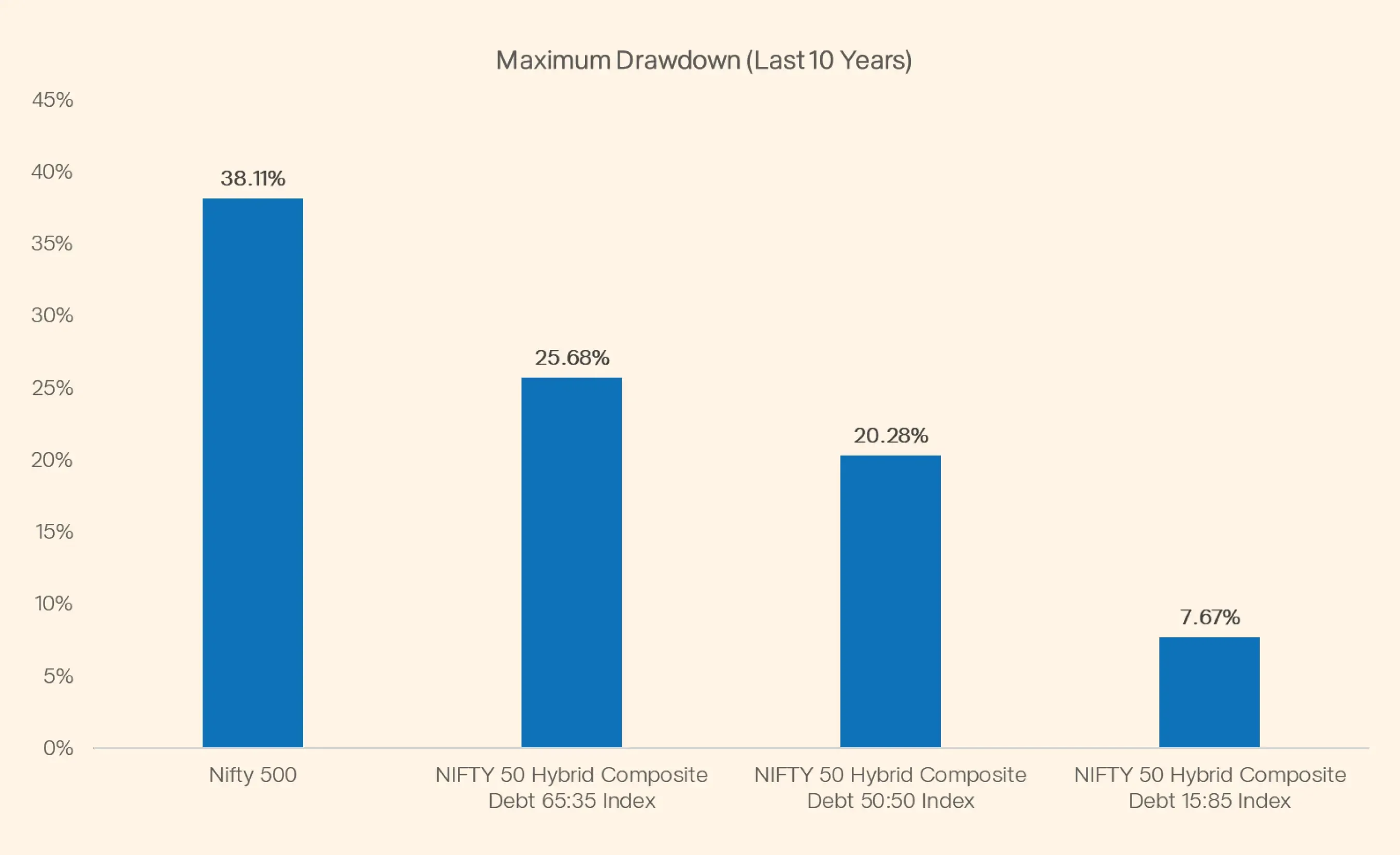
Historically, diversified portfolios have experienced lower drawdowns compared to equity-heavy portfolios.
When markets decline, the extent of loss matters. Broad equity markets (such as Nifty 500 TRI) have seen deeper drawdowns during sharp corrections. In comparison, portfolios with balanced and defensive allocation have experienced relatively lower drawdowns.
Source : MFI 360, AMFI ; Data as on April 30, 2026
Simply put, they have tended to fall less when markets fall sharply, which can make recovery both psychologically and financially easier.
Does asset allocation provide more stable returns over time?
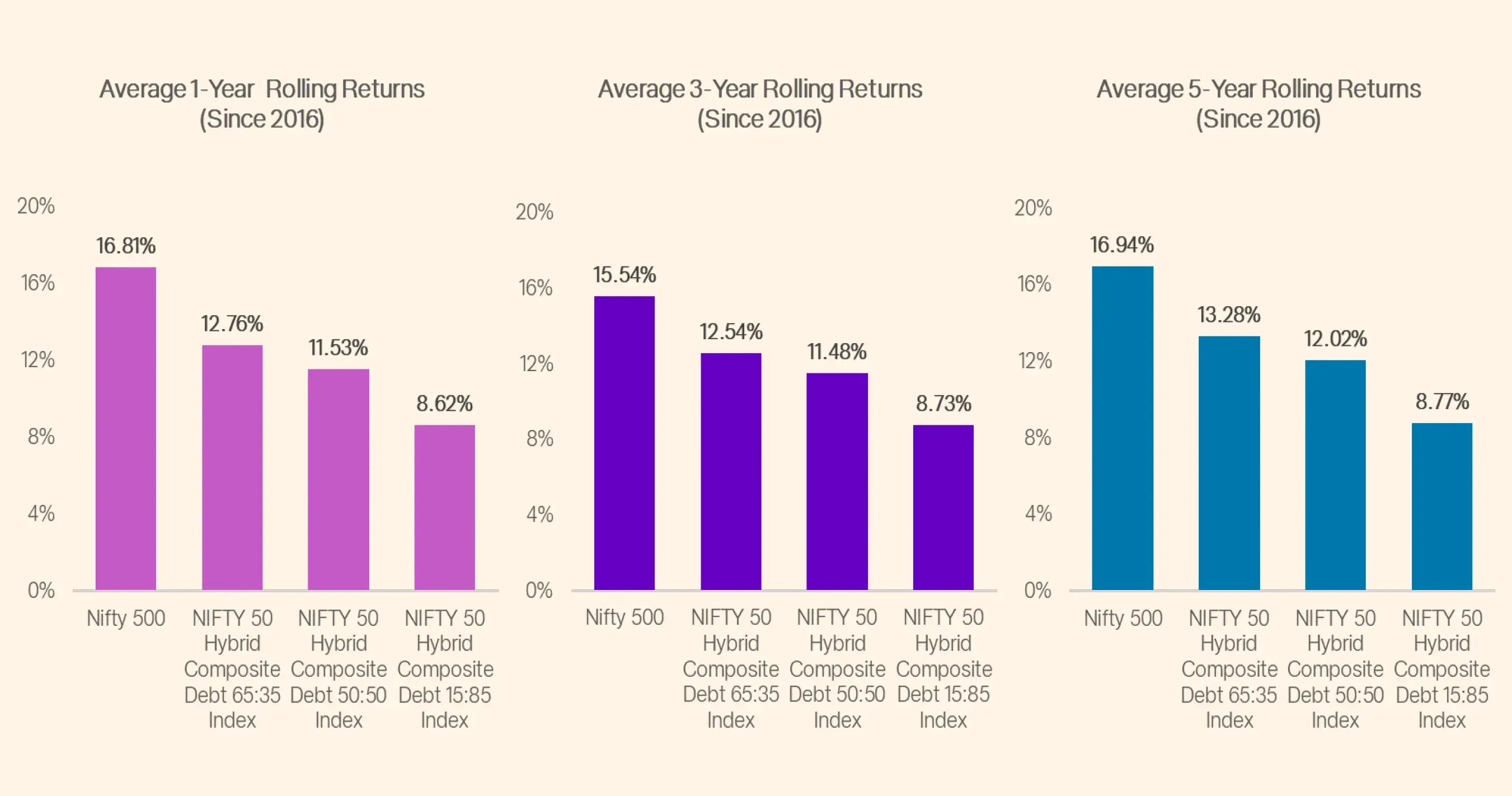
Rolling return analysis across 1-year, 3-year, and 5-year periods shows that portfolios with diversified asset allocation have tended to demonstrate:
- Smoother return patterns
- Less extreme highs and lows
- Greater consistency across different market phases
While more aggressive strategies may perform strongly during bull markets, diversified strategies have historically shown more consistent outcomes across market conditions.
Source : MFI 360, AMFI ; Data as on April 30, 2026
What happens if investors don’t follow asset allocation?
While many investors understand the concept, maintaining asset allocation consistently can be challenging. Market movements often lead to:
- Second-guessing decisions
- Delayed or missed rebalancing
- Emotional reactions during volatility
Over time, these behaviours may cause portfolios to drift away from their intended risk level. This can impact outcomes, sometimes as much as market performance itself.
How can investors implement asset allocation easily?
JioBLK ProFolios are designed to offer a structured way to approach asset allocation, especially in changing market conditions.
- Defined allocation approach
Each ProFolio follows a pre-defined asset mix, helping reduce guesswork. - Periodic rebalancing
Portfolios are rebalanced semi-annually to maintain the intended allocation. - Focus on consistency
Diversified portfolios have historically shown lower drawdowns and more stable return patterns. - Simple to access
Pre-built combinations of JioBlackRock Mutual Fund schemes, with a minimum investment starting from ₹10,000.
Investors can explore the available ProFolios here:
www.jioblackrockamc.com/models
Conclusion
Market ups and downs are a natural part of investing. Rather than trying to avoid them, a well-considered asset allocation approach can help investors stay prepared through changing conditions.
It may not eliminate volatility, but it can help make the investment journey more stable and aligned to long-term financial outcomes.
Frequently Asked Questions (FAQs)
- What is asset allocation in simple terms?
Asset allocation means spreading investments across different asset classes to manage risk. - Why is asset allocation important?
It can help reduce the impact of market volatility and enable improved consistency over time. - Does asset allocation reduce losses?
It does not eliminate losses but may reduce the extent of downside during market declines. - How often should asset allocation be reviewed?
Asset allocation is typically reviewed periodically to remain aligned with investment approach and market conditions.
JioBLK ProFolios are pre-constructed investment portfolios of Jio BlackRock Mutual Fund Schemes offered under Model Portfolios Facility.
Mutual Fund investments are subject to market risks, read all scheme related documents carefully.
For detailed terms & conditions on Model Portfolio Facility refer: https://www.jioblackrockamc.com/statutory-disclosure/terms-and-condition/terms-and-conditions